Voyager 2
The only spacecraft to visit all four giant planets
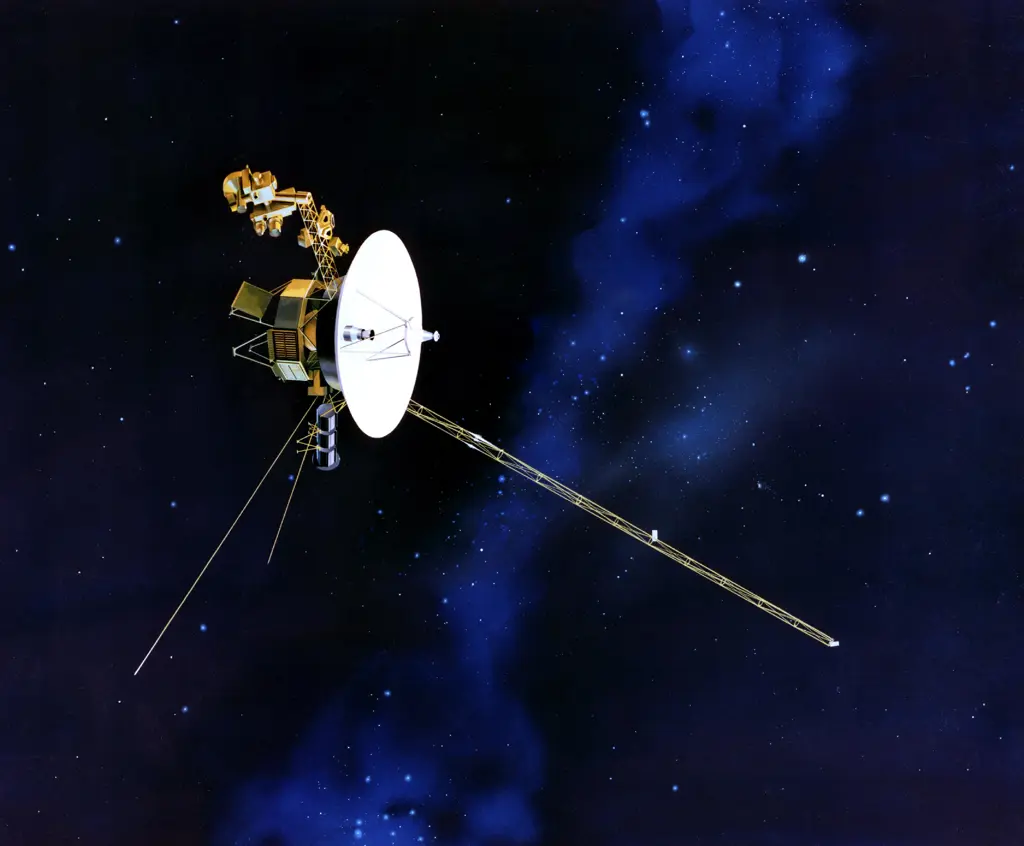
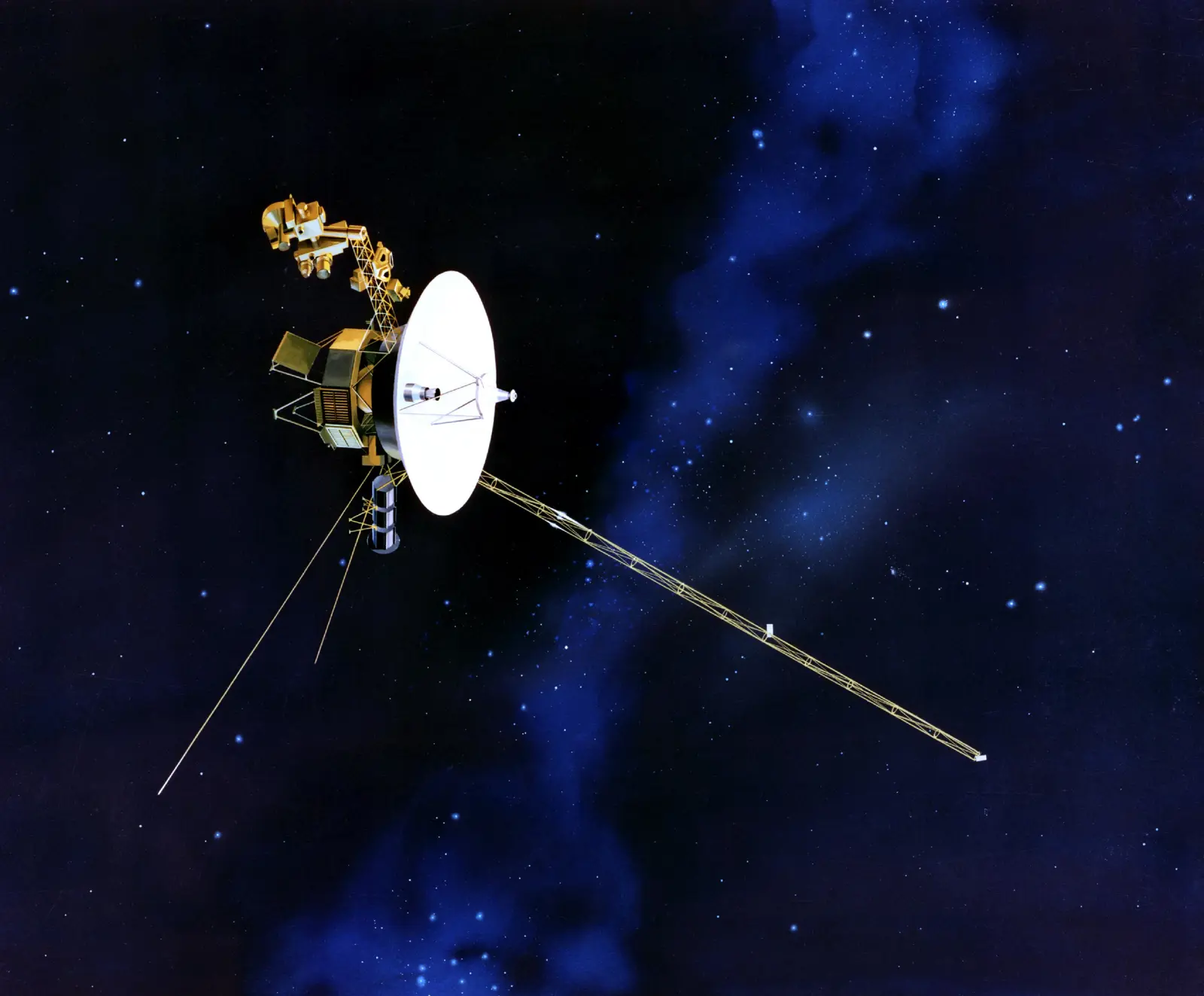
Voyager 2 launched sixteen days before its twin, on a slower trajectory that bought a once-in-176-years gift: a planetary alignment that let a single spacecraft visit Jupiter, Saturn, Uranus and Neptune in sequence. To this day it is the only probe to have flown past Uranus or Neptune.
After Neptune in 1989 the planetary mission ended and the Voyager Interstellar Mission began. Voyager 2 plunged southward out of the ecliptic, eventually crossing the heliopause in November 2018 — six years after Voyager 1, and at a different latitude that proved the boundary is asymmetric.
Power is now the limiting resource. Engineers have powered down instruments one by one and even drained a small voltage safety margin to keep the surviving four science instruments running. As of 2026 Voyager 2 is still talking — barely — from over twenty billion kilometres away.
Mission timeline
- 1977 · Aug 20Launch
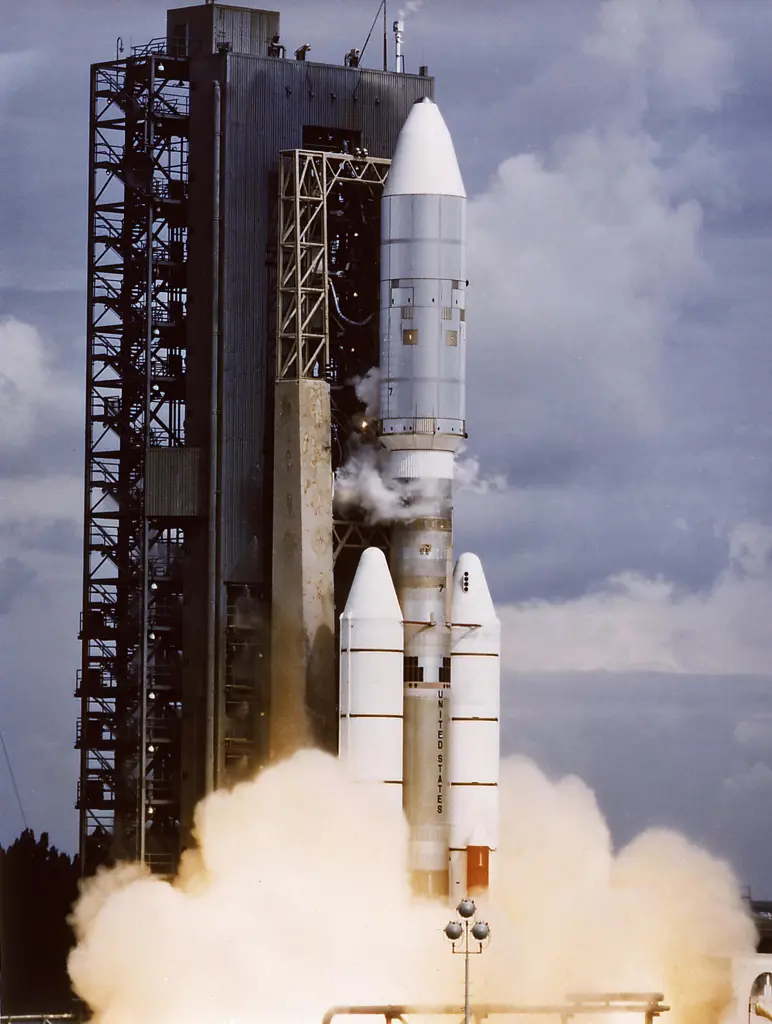
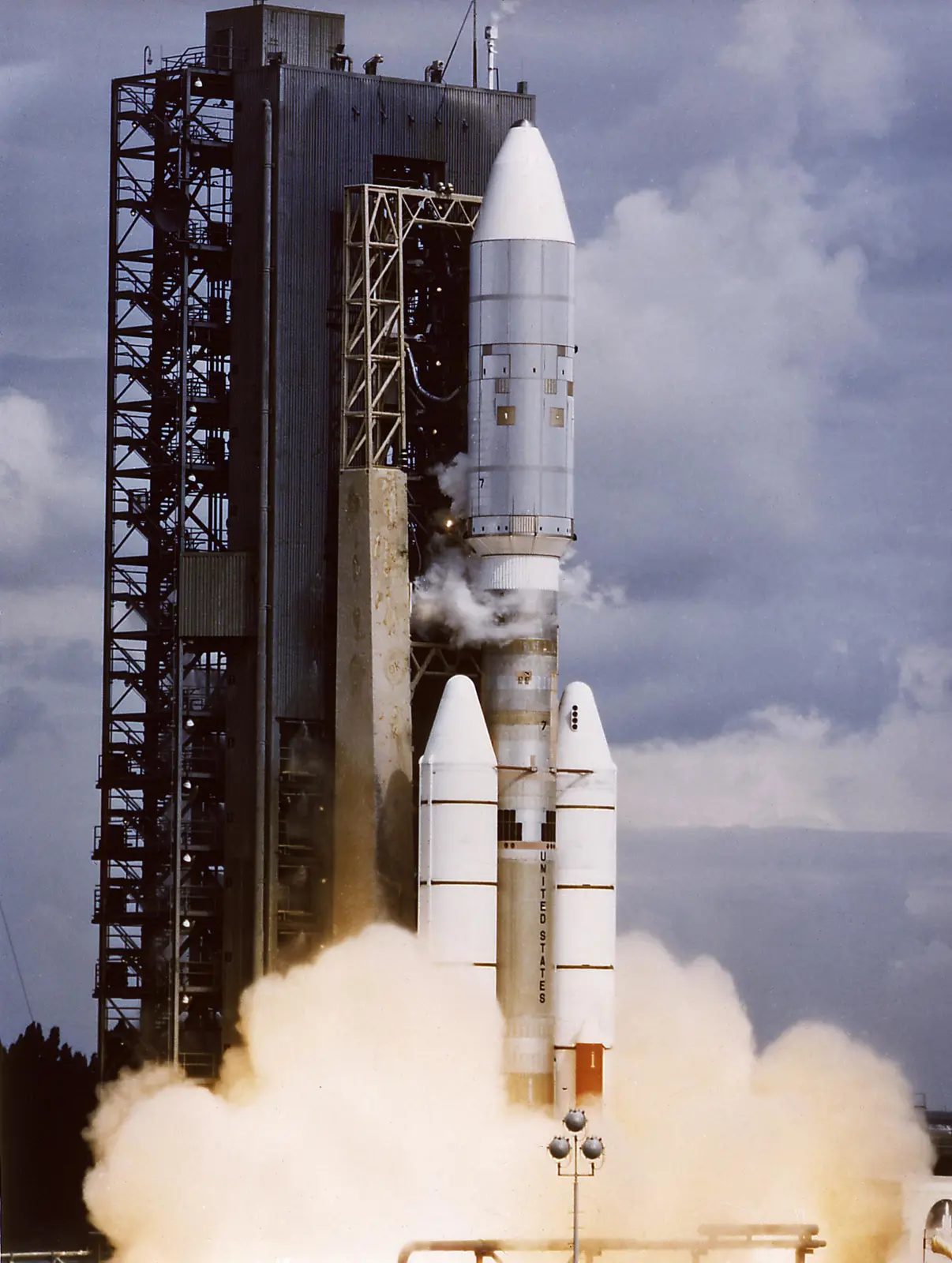
Lifted off from Cape Canaveral on Titan IIIE-Centaur — slower trajectory than its twin, set up for the Grand Tour.
- 1979 · Jul 9Jupiter encounter
Discovers a faint ring system around Jupiter; images Europa's icy crust with cracks suggestive of a subsurface ocean.
- 1981 · Aug 25Saturn encounter
Detailed scan of Saturn's atmosphere, rings and moons — sets up the gravity assist toward Uranus.
- 1986 · Jan 24Uranus flyby
Only spacecraft ever to visit Uranus. Discovers 10 new moons, two new rings and a tilted, off-centre magnetic field.
- 1989 · Aug 25Neptune flyby
Only spacecraft ever to visit Neptune. Reveals the Great Dark Spot, fastest winds in the Solar System, and nitrogen geysers on Triton.
- 2018 · Nov 5Crossed the heliopause
Second spacecraft to leave the Sun's heliosphere — at a different latitude than Voyager 1, showing the boundary is asymmetric.
- 2020 · Mar–NovDSS-43 antenna upgrade
8-month communication blackout while the only DSN antenna that can talk to Voyager 2 is overhauled for the first time in 47 years.
- 2023 · Jul 21Antenna mis-pointed
A planned command series accidentally tilts the high-gain antenna 2 degrees away from Earth; an 'interstellar shout' from DSS-43 restores contact on 4 August.
- 2024 · OctPLS turned off
Plasma Science instrument powered down to save energy — four science instruments remain.
- 2025 · MarLECP turned off
Low-energy Charged Particle instrument powered down — three science instruments remain.
- TodayStill in the interstellar wind
Magnetometer, plasma-wave subsystem and cosmic-ray subsystem keep returning data from interstellar space.
Instruments today
- Magnetometer
Measures the interstellar magnetic field — still operational
- Plasma Wave Subsystem
Detects density waves in the interstellar plasma — confirmed the 2018 heliopause crossing
- Cosmic Ray Subsystem
Galactic cosmic-ray spectrometer — planned shutdown later in 2026
- Low-Energy Charged Particle Detector
Charged-particle detector — turned off March 2025
- Plasma Spectrometer
Solar-wind / interstellar plasma instrument — turned off October 2024
Headline discoveries
Voyager 2 is the only spacecraft ever to visit the two ice giants — every photograph, magnetic-field reading and moon discovery there came from a single flyby.
On its Neptune approach Voyager 2 imaged active nitrogen geysers on the moon Triton — making it the third world (after Earth and Io) known to host eruptions.
Voyager 2 crossed the heliopause at a different distance and latitude than Voyager 1, proving the boundary of the Sun's bubble is not a sphere but a wind-shaped surface.
Related videos
Track Voyager 2 in real time
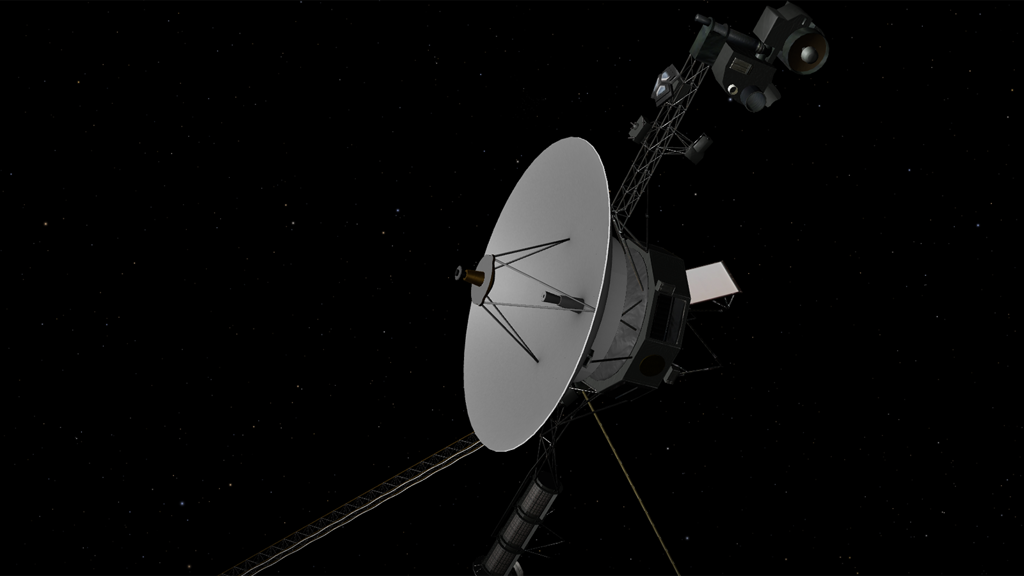
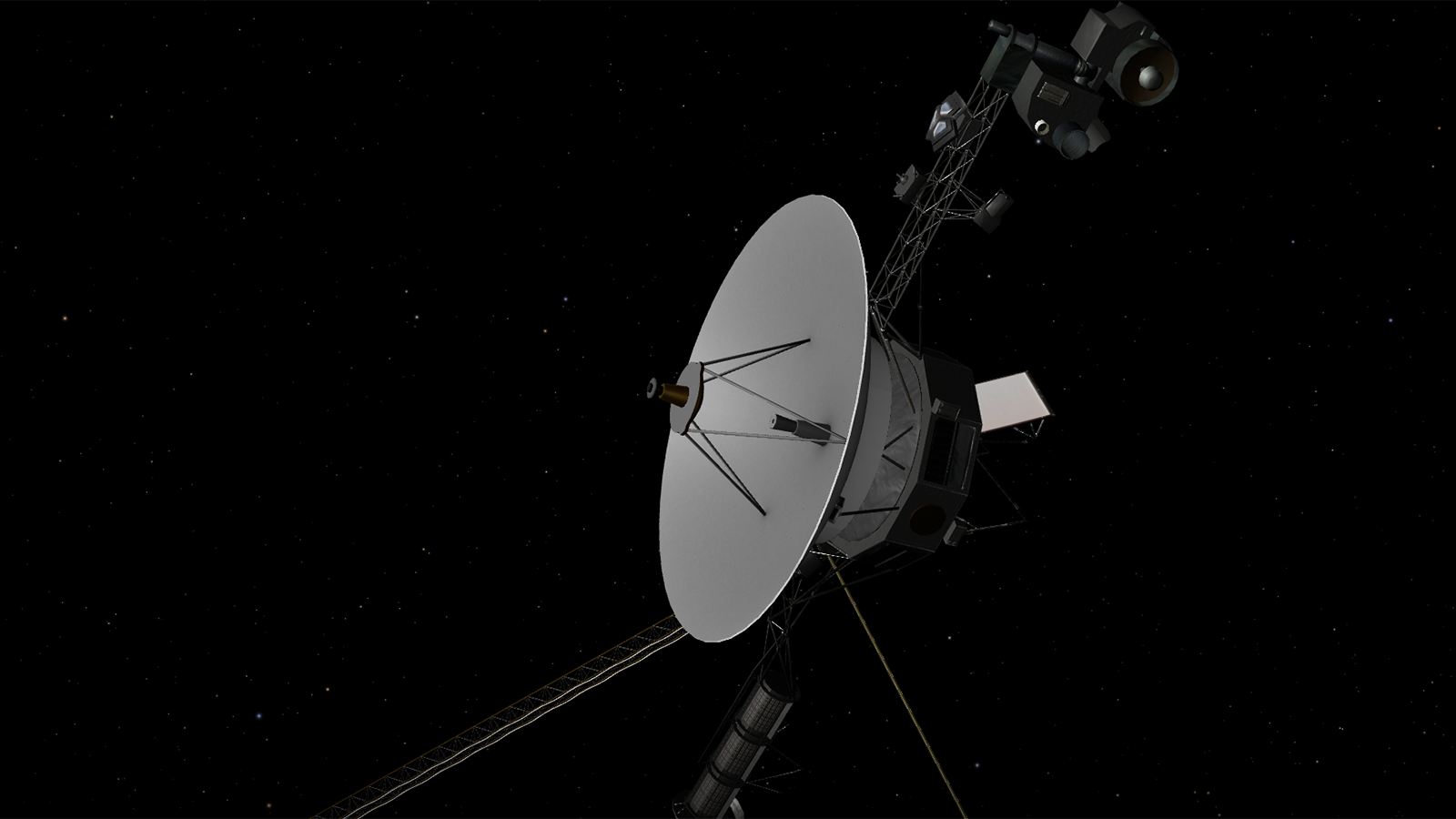
Fly alongside Voyager 2 in NASA's Eyes on the Solar System — a real-time 3D simulation of its trajectory out through interstellar space.
Data: NASA/JPL — Eyes on the Solar System