Europa Clipper
Probing an ocean world for habitability
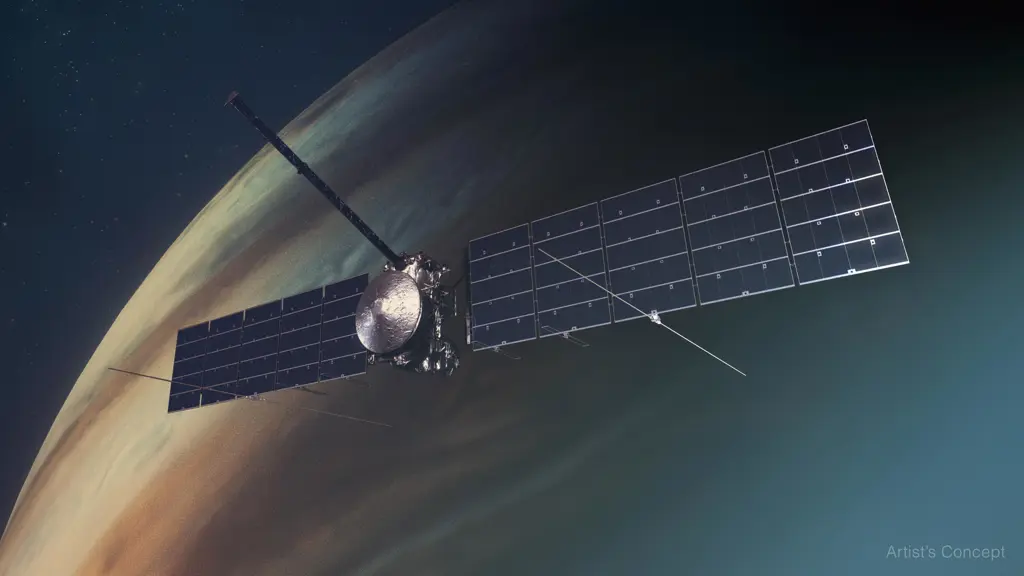
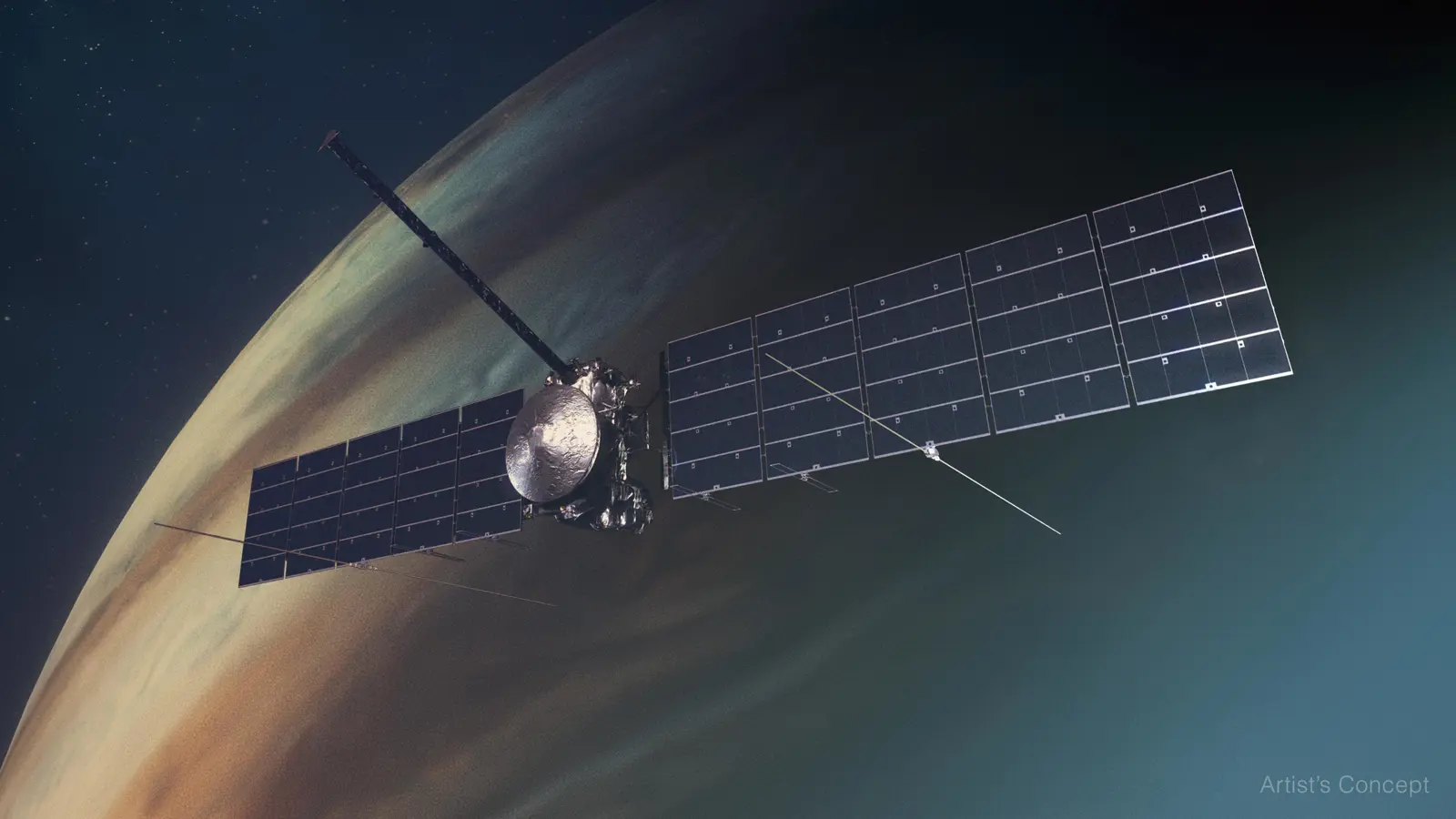
Europa Clipper is the largest spacecraft NASA has ever built for a planetary mission, sent to investigate one of the most promising places in the solar system to look for life beyond Earth: Jupiter's moon Europa. Beneath Europa's cracked ice shell lies a salt-water ocean thought to hold more water than all of Earth's oceans combined.
It is not a life-detection mission — it is built to judge habitability. Over roughly 49 close flybys it will measure the thickness of the ice and the ocean beneath it with radar, map the surface chemistry for the ingredients life needs, and study the geology to find where ocean material reaches the surface. Its solar arrays span more than 30 metres, sized to collect sunlight five times fainter than it is at Earth.
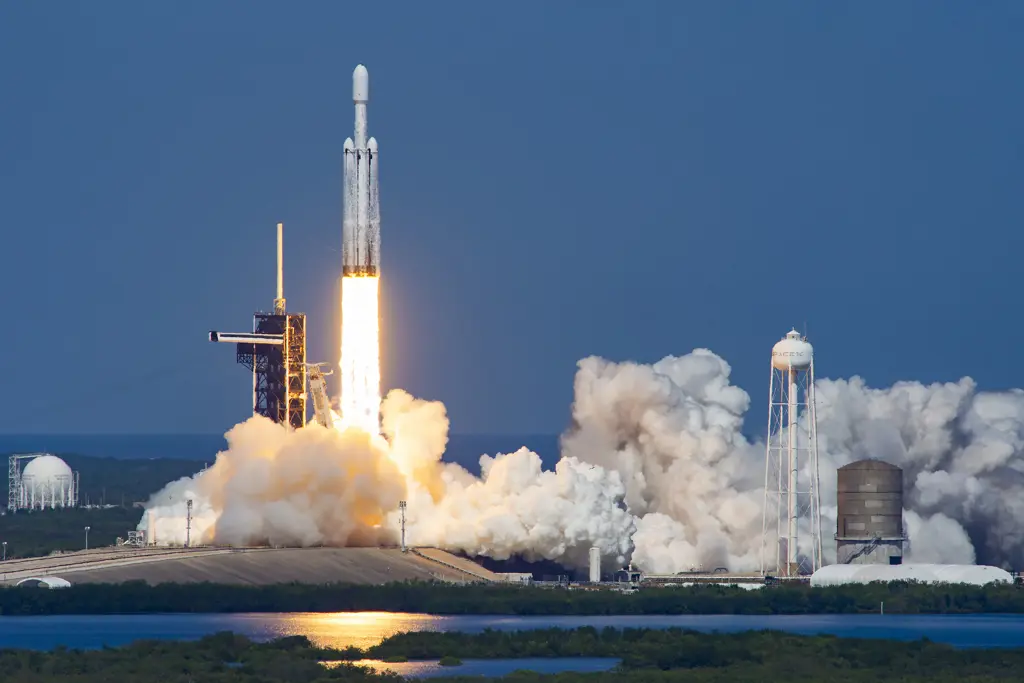
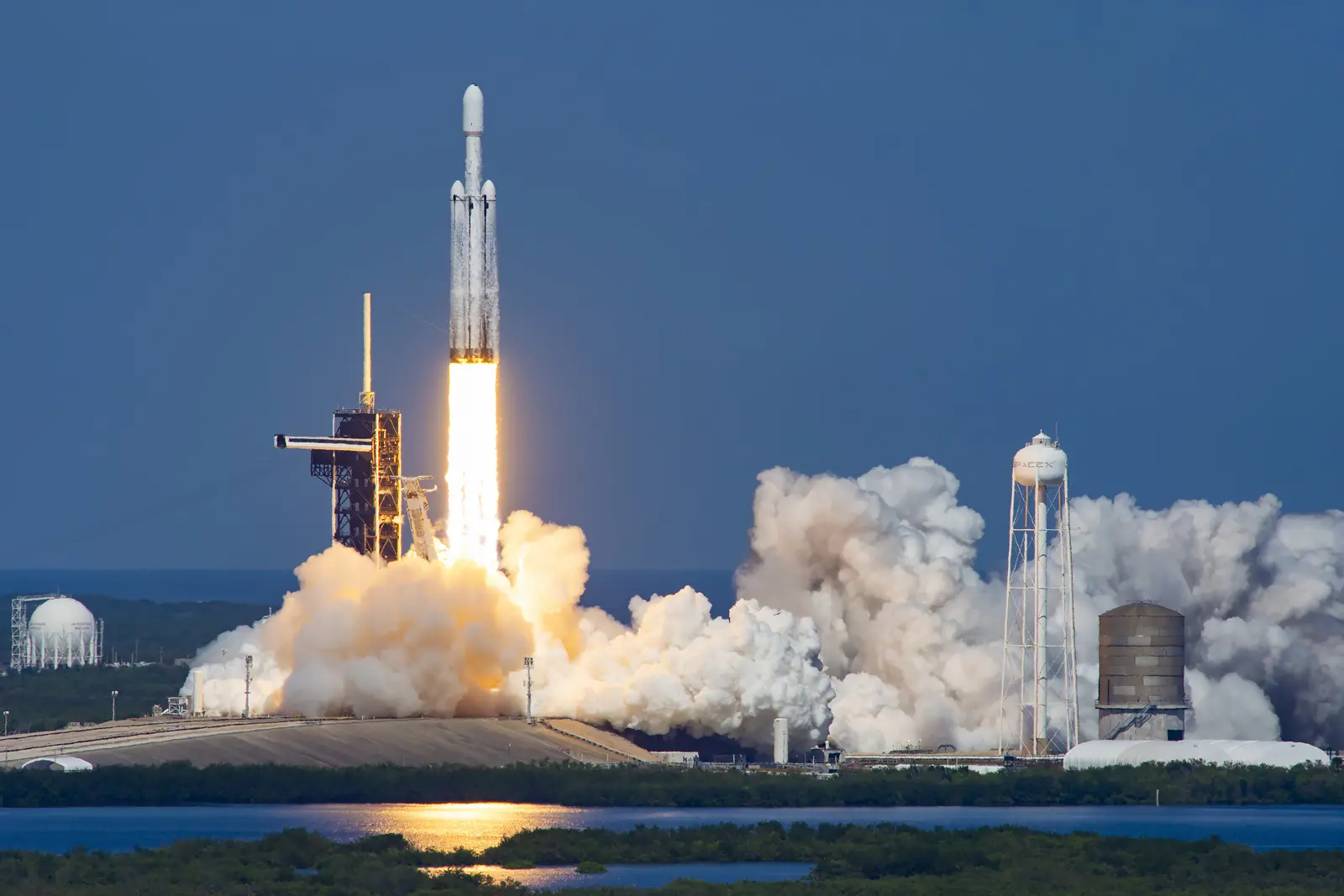
Launched on a Falcon Heavy in October 2024, Europa Clipper is taking the long way to Jupiter: a Mars gravity assist in March 2025, an Earth gravity assist in December 2026, and arrival in 2030. Once there it will orbit Jupiter and repeatedly dive past Europa, working alongside ESA's JUICE mission to survey the giant planet's ocean moons.
Mission timeline
- 2015 · MayConcept and instruments selected
NASA settles on the multiple-flyby design and picks the nine science instruments, formally starting the mission's development (Phase A).
- 2017 · FebEnters the design phase
The mission passes Key Decision Point-B and moves into Phase B, locking in preliminary designs and beginning subsystem testing.
- 2019 · AugMission confirmed
NASA confirms Europa Clipper at Key Decision Point-C, approving it to proceed to final design and full-scale fabrication.
- 2022 · MarAssembly begins at JPL
Phase D assembly and testing start at the Jet Propulsion Laboratory as instruments and subsystems are installed on the spacecraft.
- 2024 · Oct 14Launch
Lifts off from Kennedy Space Center on a Falcon Heavy, beginning a five-and-a-half-year cruise to Jupiter.
- 2025 · Mar 1Mars gravity assist
Swings 884 km above Mars to bend its trajectory and test its radar and thermal imager on the way past.
- 2026 · DecEarth gravity assist
A final flyby of Earth provides the last big push needed to reach Jupiter.
- 2030 · AprJupiter orbit insertion
Planned arrival and capture into orbit around Jupiter, setting up the Europa flyby campaign.
- 2030+Europa flybys begin
Starts roughly 49 close passes of Europa, some as low as 25 km above the ice.
- FutureMapping an ocean world
Will chart the ice shell, ocean and surface chemistry to judge whether Europa could support life.
Active instruments
- Europa Imaging System
Narrow- and wide-angle cameras to map Europa's surface in colour and stereo
- Europa Thermal Emission Imaging System
Thermal-infrared imager hunting warm spots that betray recent activity or plumes
- Mapping Imaging Spectrometer for Europa
Maps the distribution of ices, salts and organics across the surface
- Ultraviolet Spectrograph
Studies the thin atmosphere and searches for erupting plumes
- Mass Spectrometer for Planetary Exploration
Sniffs the composition of the tenuous atmosphere and any plume gases
- Surface Dust Analyzer
Tastes the composition of dust grains kicked off Europa's surface
- Radar for Europa Assessment and Sounding
Ice-penetrating radar to measure the ice-shell thickness and find water within it
- Europa Clipper Magnetometer
Measures magnetic fields to confirm the ocean's depth and saltiness
- Plasma Instrument for Magnetic Sounding
Characterises the plasma around Europa so the magnetometer can read the ocean cleanly
Frequently asked questions
Track Europa Clipper in real time
Follow Europa Clipper in NASA's Eyes on the Solar System — a real-time 3D simulation of its gravity-assist cruise and arrival at Jupiter.
Data: NASA/JPL — Eyes on the Solar System